
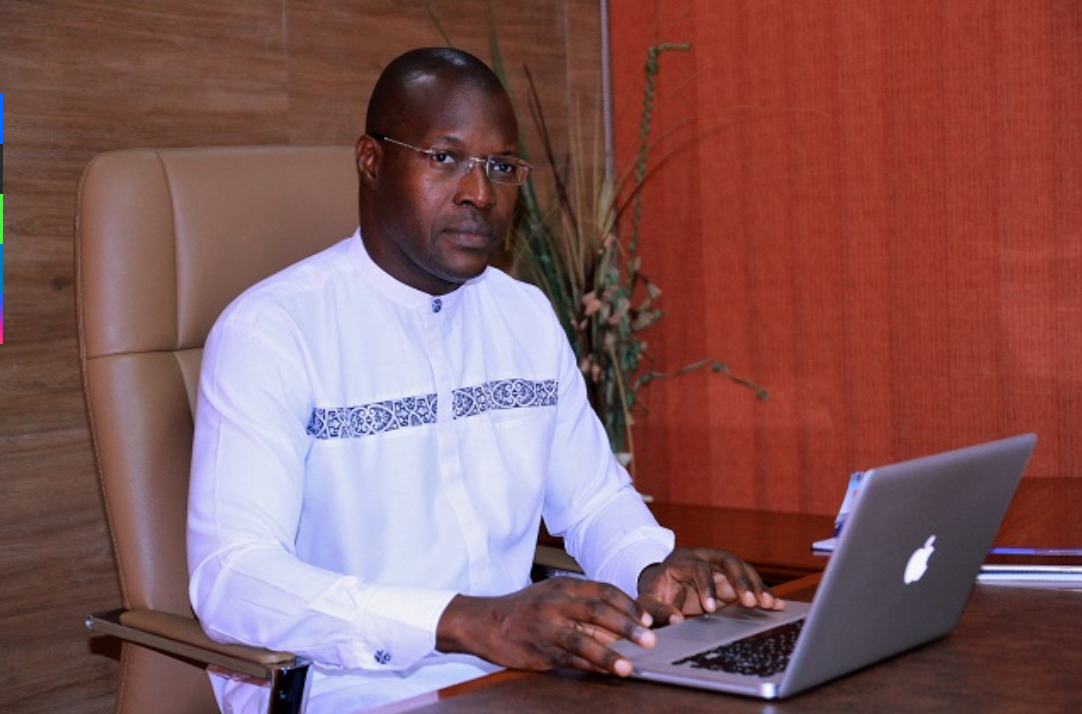
An opinion piece by Zacharia Tiemtoré, on the management of the COVID-19 crisis in Burkina Faso.
Repeating Our Mistakes: Building a Coordinated Response to COVID-19 Together
The excitement of the New Year had kept us in a state of collective carelessness, even as the first warnings about this coronavirus-related disease were already circulating. But nothing too alarming to spoil our fun or dampen our festive spirit.
For those with family, relatives, or friends in China, a few messages were exchanged, just enough time to reassure each other and quickly conclude that there was nothing to do but accept the lockdown and the other measures taken by the Chinese authorities.
Apart from these few people concerned about the fate of their loved ones, the vast majority of us observed with little interest what was, nevertheless, the beginning of a global health crisis. The few comments prompted by the news coming out of Hubei province were cold, bland, and devoid of empathy. « They deserved it, they shouldn’t have been eating just anything, » was the common refrain.
The rare people who had the courage to remind us that we should be paying attention to what was happening in China were mocked and sharply reprimanded. “China is far away, let’s take care of our own problems, and besides, this disease can’t reach our countries; the heat will deter the virus from coming to cause us trouble.” In saying this, we had forgotten the wise advice of Amadou Hampaté Ba: there is no such thing as a small quarrel.
Meanwhile, the disease was evolving, and a name was now given to it: COVID-19. The number of cases was skyrocketing, and other countries outside of China were being affected.
We continued to believe that we weren’t concerned because the virus wasn’t present on the continent, even though, admittedly, it had moved much closer.
We tried to convince ourselves that it wasn’t a « Black disease, » thinking that would be enough to spare us. Unfortunately, the inevitable happened. The first official cases in Francophone West Africa were announced in Senegal, then a few days later in Burkina Faso. WhatsApp groups, usually inactive or completely dormant, suddenly became abuzz, as did some social media platforms.
Fake news competed with real information, and rumors enjoyed their heyday. Connected urbanites, self-proclaimed virologists or epidemiologists, began sharing alerts, remedies, and advice. Fear and anxiety, those of illness and the unknown, gripped a segment of the population.
This segment of the connected population, capable of reading everything circulating online, consumed and sold goods, traveled and planned for the future. Others, far removed from this turmoil, disconnected from the relentless flow of information, continued their favorite pastimes, for them, the sky hadn’t changed color, and there were no storms on the horizon.
It’s instructive to witness this abrupt awakening, this genuine anxiety among those who, until then, believed themselves safe. Within families, among groups of friends, and within professional circles, we jostled to change our habits. Gone were the handshakes, the nods, the hugs used as greetings. The slightest cough was now suspect, and its source eyed with fear. Handwashing stations reappeared, face masks were donned, and prayers for God multiplied.
The shockwave had spread, and the psychosis was now firmly entrenched…
Faced with the urgency and to confront the threat, unprecedented measures were taken by African governments (lockdowns, quarantines, border closures, school and university closures, market closures, bans on gatherings, curfews, etc.).
Proposals are pouring in from all sides, and financial contributions, both individual and corporate, are being made to help combat this pandemic. Everyone is trying their best, though without effective coordination, to be of service during these difficult times. However, the most vulnerable are already feeling the consequences of some measures. Food is becoming scarce for some.
Income is dwindling. For, in truth, our vulnerability runs very deep. Disease, hunger, thirst, lack of money, insecurity, and idleness are constant threats, leaving us with only one option: to risk everything each day to earn a living.
The coming weeks and months will be trying. Our solidarity, our ability to think differently, and our creativity will be essential. We have not yet been able to develop a sustainable African model based on our resources (human, technological, scientific, financial, environmental, etc.).
Trailing behind an international system, we are subject to its dictates and have no control over its major directions. This pandemic is being heralded as a humanitarian catastrophe for Africa. The prevailing rationale leads to this conclusion. Yet, what if things don’t unfold as predicted?
What if this pandemic is ultimately a blessing in disguise, a warning, a sign from above, to stop repeating the same mistakes? What if Africa, for once, fares better than others and learns the lesson?
It’s possible, if we reflect and act together. It’s possible, if our wisdom prevails over our bravado. It’s possible, if our ancestral discipline is rekindled within us.
It is possible if we strengthen our clinical trials and share our best practices, at least at the sub-regional level. It is possible if we make room for all good ideas, wherever they come from. It is possible if we stop turning against each other. Finally, it is possible if leaders and the people talk to each other, listen to each other, and adopt a proactive approach.
And for the future… there will still be time to educate differently, anticipate crises, value local expertise, create and operate strategic analysis and decision-support units… and, of course, know when to stop the squabble between two lizards…
Dr. Zacharia Tiemtoré
Co-founder and President of the Higher Institute of Human Security
Email: zacharia.tiemtore@issh-edu.com